NJWB August 17th, 2018
THE PUBLIC NEEDS TO SUPPORT PROACTIVE OFFICIALS
Sidebar Article by David Zimmer
The media have brought our attention to the costs and impact of broken infrastructure — think Flint's lead fiasco or the constant water main breaks in older Northeast cities such as Philadelphia. Users are aware, or should be aware, of the need for upgrades nationally that, by most estimates, run to hundreds of billions of dollars, increasing every day. New Jersey's most recent clean water and drinking water "needs surveys" for what the state requires from EPA total $26 billion. Yet despite all that is insufficient with water infrastructure today, little headway is being made to correct this gaping failure.
Why, in a capitalistic society, where most strategic decisions are based on financial optimization, did we as a nation allow the situation governing such a critical resource (second maybe only to the air we breathe) to get so out of whack? I suggest the answer lies in two fundamental missteps regarding communication and risk.
Too many local officials and utility managers are trapped between capital investment desires and the reality of limited annual budgets. Further, we, the voting public, often penalize officials willing to make prudent, long-term investment choices if those choices lead to higher rates. The easier choice for utility managers is to push the decision off until there is a crisis — ask yourself, would you choose the option of paying full freight for a precious resource because that would likely cost you your job? As a result, too many local systems manage investments with a reactionary approach rather than on a more fiscally prudent proactive basis.
What we have here is a failure of communication. The public needs to be engaged in an honest conversation about the state and cost of the water infrastructure that serves the citizenry. Instead of fearing the reaction of the public, local officials and utility managers need to treat their ratepayers like adults and inform us of our systems' immediate capital needs and annual operating costs.
This conversation should include a dialogue on the true cost of maintaining that infrastructure at a level which doesn't just bring each system up to minimal standards, but optimizes service for public health and economic growth — in other words, a system that brings a better quality of life.
The discussion should include the cost of any new debt service and quantify the potential savings and benefits that accrue from the new, more efficient components — that is where the cost of the investment equals the annual debt less annual savings. The dialogue also needs to include a frank assessment of the increased costs if there is delay or inaction regarding the investment decisions.
These conversations need to be had a thousand times over concerning every system, serving every town, in every state in the nation. As for financing costs, the more cheap federal funds made available that minimize annual debt costs (interest included), the more projects that will take advantage of those funds, and the more projects that will be constructed.
Water cognoscenti take note: national metrics mean little to the average resident who receives service from a different provider than his neighbor five blocks away, let alone in the next state. Complaining that ratepayers are willing to foot increasing amounts for cable or cellular service but not for water, or attempting to sell the value of water service versus the latest Poland Spring offering, has clearly not been a winning marketing strategy.
There is also the issue of risk. For our part, the public needs to be educated on, to recognize, and to understand the economics of water. We need to be shown — constantly — and accept that investing in our systems on a regular and timely basis is cheaper than waiting until there is a break that costs ten times as much to repair. As in the car analogy, we can either choose to spend $19.95 on regularly scheduled oil changes, or do nothing and spend $3,000 on a new engine block when it overheats and seizes up.
More importantly, the public must make water economics a voting issue. Armed with the understanding that higher rates in the near term save us from much higher rates over the long term, the public needs to demand that local officials act as fiduciaries and pursue the more prudent path of proactive investment. The public must then reward this behavior by re-electing those local officials, resoundingly, for their willingness to act responsibly. Only then will we create the environment for officials to make the right water infrastructure investments on our behalf, one system at a time.
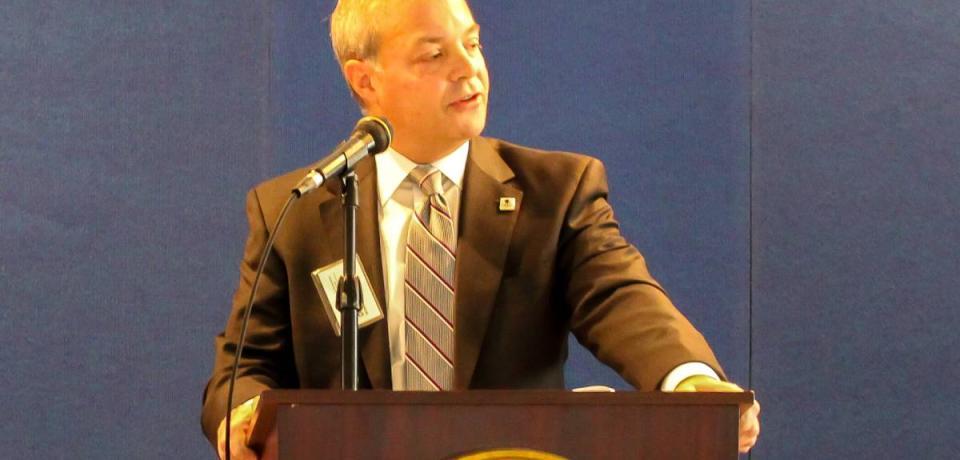
David Zimmer is the executive director of the New Jersey Infrastructure Bank, which partners with the N.J. Department of Environmental Protection to administer the state revolving fund Water Bank.
| Date | Title |
| 8/17/2018 | Public Needs to Support Proactive Officials |
Tags
For more information, contact the New Jersey Infrastructure Bank at (609) 219-8600.
Like us on
Facebook
and connect with us on
LinkedIn.